
Description
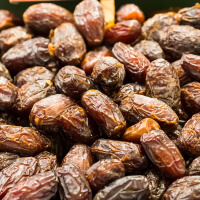
Medjool dates are fruits that you can eat dry or ripe. They are known to be high in potassium, magnesium, vitamin B5, and B6. However, be very careful because this fruit has very high sugar content.

Possible Benefits
- May improve digestion
- May strengthen your immune system
- May prevent heart disease
- May improve skin appearance
- May strengthen muscle development

Required Equipment
Dried or ripe Medjool dates

How to Do It
- You can eat the dates dry or ripe. Remember to eat in moderation.
- You can also prepare a dressing with the Medjool dates to eat with toast. To prepare it, take a cup of dates, put them in a saucepan over high heat with water until you cover them all. Add 2 teaspoons of lemon juice, and wait until it boils.
Then it should sit low for 10-20 minutes until the mixture is creamy. Then remove from heat, let cool, and store in the refrigerator to use whenever desired!
Why it works
- Potassium is an essential mineral for the body. It helps build muscle, generate proteins needed by the body, and break down some foods.
- Dates act as a natural astringent that optimizes the digestive process.
- Magnesium helps to strengthen the immune system and preserve the heart's rhythm of functioning.
- Pantothenic acid (vitamin B5) helps improve the appearance and health of the skin.

Time Commitment
1-3 minutes if eating raw
Up to 30 minutes to prepare the dressing

Suggested Frequency
1-2 times per week
Time of Day
Any

Possible Side Effects
In some people, it may cause dizziness and headaches.

Tips
- Medjool dates belong to the famous Sirtfood diet.
- There are other varieties of dates: Zahid, Kadrawi, and Sukkari.
- Has a higher nutritional value when ripe.
- Often, people make sugar from medjool dates.
Supporting Studies and Articles
Expand Collapse- Effects of date ( Phoenix dactylifera L., Medjool or Hallawi Variety) consumption by healthy subjects on serum glucose and lipid levels and on serum oxidative status: a pilot study. https://pubmed.ncbi.nlm.nih.gov/19681613/
- Nutritional and functional properties of dates: a review. https://pubmed.ncbi.nlm.nih.gov/18949591/
- The fruit of the date palm: its possible use as the best food for the future? https://pubmed.ncbi.nlm.nih.gov/12850886/
- Date (Phoenix dactylifera) Polyphenolics and Other Bioactive Compounds: A Traditional Islamic Remedy’s Potential in Prevention of Cell Damage, Cancer Therapeutics and Beyond. https://www.ncbi.nlm.nih.gov/pmc/articles/PMC4691153/
- Nutritional assessment, phytochemical composition and antioxidant analysis of the pulp and seed of medjool date grown in Mexico. https://www.ncbi.nlm.nih.gov/pmc/articles/PMC6648623/
- Glycemic indices of five varieties of dates in healthy and diabetic subjects. https://www.ncbi.nlm.nih.gov/pmc/articles/PMC3112406/

Upgrade Yourself with our Breakthrough App
Get UltiselfMore Habits

Rate Habit
Medjool Dates