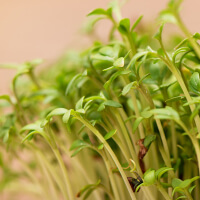

Description
Watercress is often an underrated plant that contains the highest level of nutrients. According to the Powerhouse Fruits and Vegetables list, watercress contains the highest density of nutrients.

Possible Benefits
- May improve the immune system
- May improve bone health
- May decrease cholesterol levels
- May improve cardiovascular health
- May improve digestion
- May help generate red blood cells
- May improve skin appearance
- May boost cognitive function
- May support wound healing

Required Equipment
Fresh watercress

How to Do It
Watercress can be eaten like any other vegetable, in salads, creams, or dressing. We recommend adding it to your green smoothie!
A common recipe is to create a cream of watercress and add it to bread with some protein such as chicken.
Why it works
- Watercress has a very high concentration of vitamin C, which is essential for the immune system.
- The high content of vitamin B6 helps improve cognitive function, especially memory.
- The high content of calcium, potassium, and manganese makes them helpful in strengthening bones and making them stronger.
- It acts as a diuretic, which may improve digestion in some cases.
- It contains a high concentration of Omega-3 fatty acids, which help improve heart health and produce red blood cells.
- Due to its high content of riboflavin, it helps the regeneration of tissues.

Time Commitment
5-10 minutes

Suggested Frequency
3 times per week
Time of Day
Any

Possible Side Effects
It contains a high quantity of vitamin K, which may interfere with blood-thinning medications.
Upset stomach

Tips
- Consume fresh watercress to get the best benefits.
- It is a plant that dehydrates quickly.
- Look for it your nearest organic market.
- Its high content of nutrients makes it the best vegetable to consume.
- It has more vitamin C than an orange!
Supporting Studies and Articles
Expand Collapse- Defining Powerhouse Fruits and Vegetables: A Nutrient Density Approach. https://www.cdc.gov/pcd/issues/2014/13_0390.htm
- Vegetable of the month: Leafy greens. https://www.health.harvard.edu/heart-health/vegetable-of-the-month-leafy-greens
- Effects of Watercress (Nasturtium nasturtium) extract on selected immunological parameters of rainbow trout (Oncorhynchus mykiss). https://www.ncbi.nlm.nih.gov/pmc/articles/PMC4655775/
- Dietary Cold Pressed Watercress and Coconut Oil Mixture Enhances Growth Performance, Intestinal Microbiota, Antioxidant Status, and Immunity of Growing Rabbits. https://www.ncbi.nlm.nih.gov/pmc/articles/PMC6262618/
- Characterization of the watercress (Nasturtium officinale R. Br.; Brassicaceae) transcriptome using RNASeq and identification of candidate genes for important phytonutrient traits linked to human health. https://www.ncbi.nlm.nih.gov/pmc/articles/PMC4875719/
- Diversity in global gene expression and morphology across a watercress (Nasturtium officinale R. Br.) germplasm collection: first steps to breeding. https://www.nature.com/articles/hortres201529
- Phenolic profile and antioxidant potential of wild watercress (Nasturtium officinale L.). https://www.ncbi.nlm.nih.gov/pmc/articles/PMC4656250/
- Watercress supplementation in diet reduces lymphocyte DNA damage and alters blood antioxidant status in healthy adults. https://pubmed.ncbi.nlm.nih.gov/17284750/
- Healthy Roots and Leaves: Comparative Genome Structure of Horseradish and Watercress. https://www.ncbi.nlm.nih.gov/pmc/articles/PMC6324231/

Upgrade Yourself with our Breakthrough App
Get UltiselfMore Habits


Rate Habit
Eat Watercress